Blogs
Designing AV Spaces That Evolve: How O2K Is Reimagining The Beyonders Centre
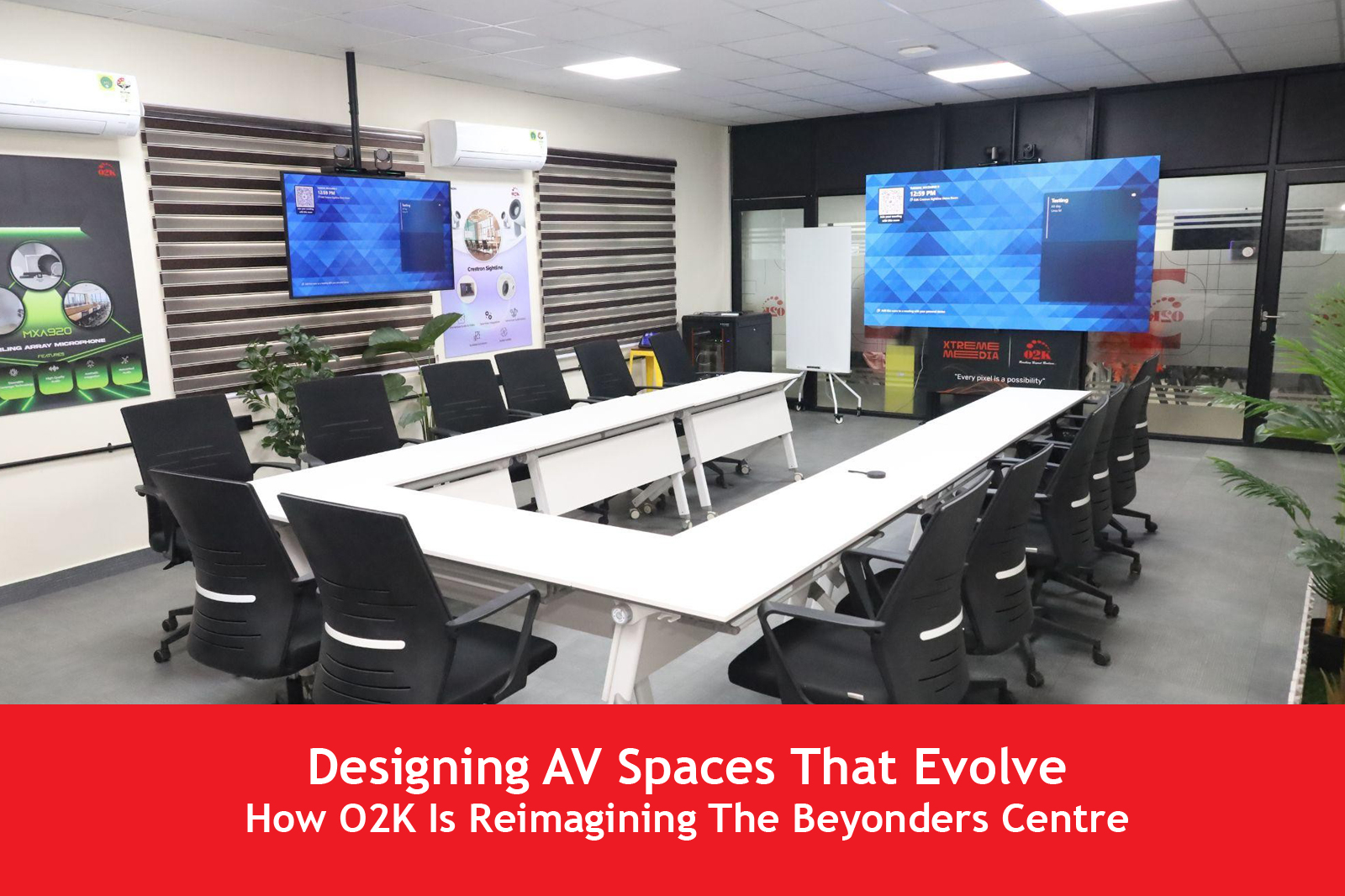
AV environments represent long-term commitments. Once designed and deployed, they are expected to perform reliably across years of shifting work patterns, collaboration styles, and platform upgrades. Yet the pace at which people meet, share information, and interact with technology continues to accelerate.
The result is not that AV systems stop working. It is that they quietly stop feeling current. The real challenge today is not about installing better technology at a single point in time, but about designing AV spaces that are capable of evolving as expectations change.
This thinking frames how O2K has approached the latest upgrades at The Beyonders Centre in Chennai.
The Beyonders Centre as a Living AV System
The Beyonders Centre was conceived as a place where enterprises, consultants, architects, and IT teams could experience AV solutions in real-world scenarios before making decisions. Structured around nine distinct zones, each representing a common workplace use case, the Centre was designed from the outset to evolve.
Rather than rebuilding spaces, O2K has treated The Beyonders Centre as a living AV system. One where intelligence, performance, and experience can be upgraded over time, while the spatial logic remains intact. This mirrors a real enterprise challenge: improving AV environments without tearing them apart.
The recent upgrades across The Beyonders Centre and the Crestron Sightline Room demonstrate what this approach looks like in practice.
What Advancement Really Means in Practice
Visual environments: clarity over scale
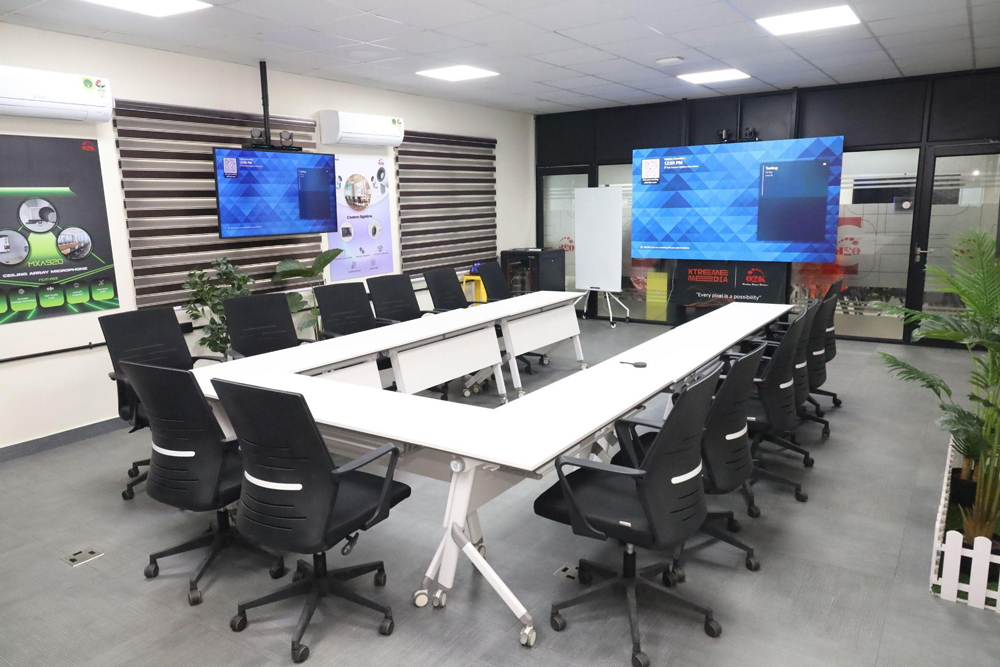
In high-stakes collaboration environments, ‘bigger’ only matters if information remains readable and consistent across the room. The Crestron Sightline Room has been upgraded with an Xtreme Media Active 110-inch LED video wall (ACE Series) with a 1.5mm pixel pitch, built for high-detail content where legibility cannot be compromised. The installation is integrated into the Crestron control ecosystem, enabling one-touch presets for different content types and streamlined source switching through a single interface.
Just as importantly, the display includes intelligent monitoring through Vigilant-IoT, enabling real-time visibility into display health and operating conditions. This is the kind of detail that separates a spectacular screen from a reliable enterprise asset.
Collaboration intelligence: simplicity that actually gets used
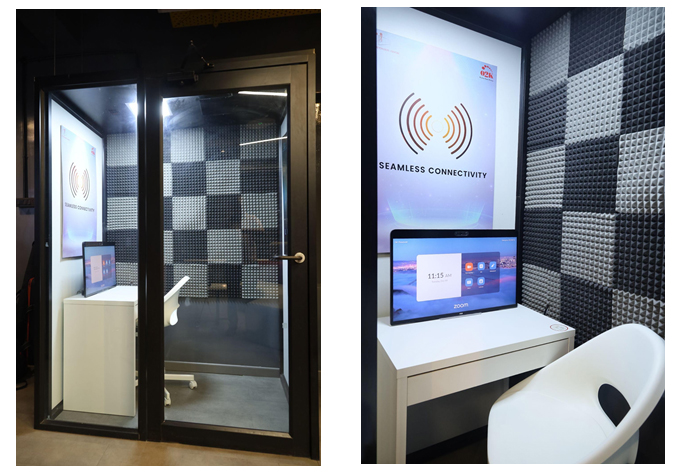
In the Quiet Room, O2K has installed a DTEN ME 27-inch Pro, an all-in-one personal collaboration display running native Zoom software. The demonstration value is straightforward: a compact collaboration experience without the usual complexity of external PCs, codecs, or the small failures that often come with cable-heavy setups.
The device supports AI-powered auto-framing through a 3-camera array and voice capture through an 8-microphone array with beamforming and echo cancellation. It also supports DTEN Smart Connect for BYOD use cases, allowing a laptop to tap into the device’s camera, microphones, touchscreen, and speakers via USB-C. In practice, this is about removing friction so smaller rooms stay active and adopted.
Audio design: reducing fatigue, not just improving volume

Audio upgrades at The Beyonders Centre are framed around listening comfort and cognitive ease, especially in multi-participant hybrid meetings.
At the Microsoft Signature Demo Station, O2K has implemented Q-SYS spatial audio. The principle is simple: when multiple remote participants speak, their voices are rendered from distinct positions aligned to where they appear on screen. This makes conversations easier to track and helps reduce the mental effort of following complex discussions. The setup integrates with Teams Rooms requirements and works with a certified ecosystem that includes the Sennheiser TeamConnect Ceiling 2 microphone array.
Room design from scratch: a complete collaboration build
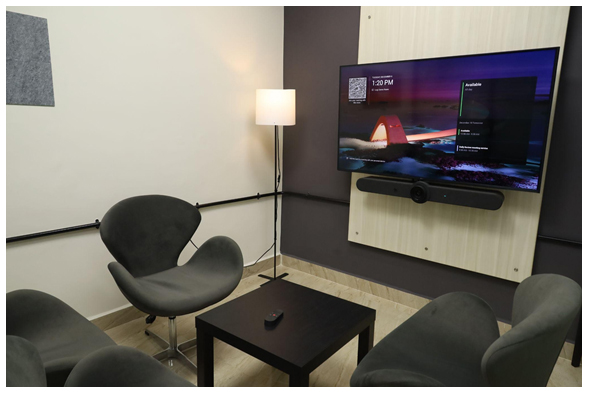
The Logitech Demo Room is positioned as a ground-up build centred around the Logitech Rally Bar, with the Logitech Tap Scheduler outside the room for booking visibility and ad-hoc scheduling. The Rally Bar’s camera system includes AI framing through RightSight, supported by an additional AI Viewfinder that maintains room awareness and enables smoother camera behaviour. The Tap Scheduler integrates with Microsoft 365 calendars and uses PoE for simplified deployment.
The real value of this zone is not any single device. It is the experience of a room designed where collaboration is the primary use case, not an afterthought.
Acoustics and privacy: performance beyond meeting rooms
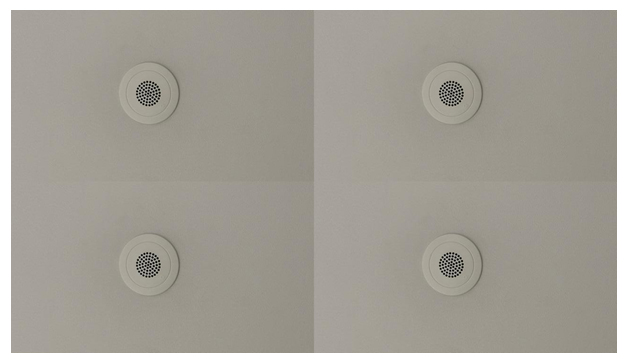
Not all AV outcomes are visual or platform-based. Acoustic privacy shapes how people work, especially in open or semi-open environments.
O2K’s live demonstration of the Biamp Cambridge Qt X sound masking system illustrates how acoustic comfort can be engineered without physical barriers. The demonstration covers how controlled masking sound can reduce speech intelligibility beyond a certain distance, while maintaining a comfortable environment. For industries where privacy and compliance matter, this becomes a workplace infrastructure layer, not an optional add-on.
Communication infrastructure: signage as a system
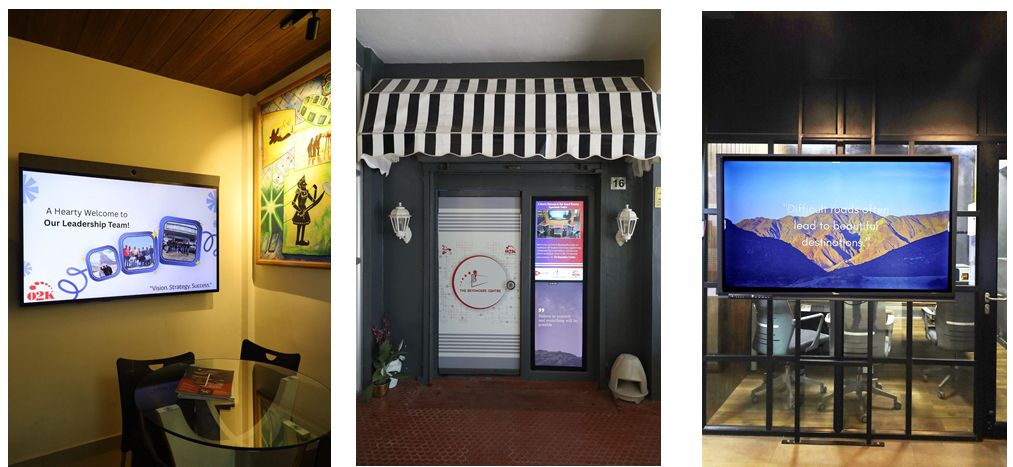
Across O2K Chennai office spaces, PADS4 digital signage has been deployed as a centralised communication infrastructure. With central content management, targeted messaging by zones, and scheduled content, the system can support wayfinding, emergency notifications, corporate updates, and real-time information delivery.
In an experience centre context, this matters because it demonstrates how digital layers behave as a networked system, not as standalone endpoints.
Conclusion
Understanding how AV environments evolve is difficult to convey through specifications or diagrams alone. Many of the most meaningful improvements are subtle. They are felt in how clearly information is seen, how naturally conversations flow, and how little effort it takes for a space to simply work.
The Beyonders Centre exists to make those differences tangible. For organisations planning what their AV spaces need to support next, experiencing an environment that has been designed to evolve offers a far clearer starting point than any specification sheet ever could.